“I was told I could not have full mouth implants because my jawbone is too thin.” For anyone who has been missing teeth for years, that sentence is often where the search stops. The standard next step has been months of bone grafting before treatment can even begin. There is now a technique built specifically for this group of patients: the pterygoid implant. It is placed in a position that is entirely different from a conventional implant, and it allows patients with a severely thin upper jaw to receive a strong, functional new set of teeth, in many cases with no additional grafting at all.
Why the Upper Jawbone Becomes Thin in the First Place
Before looking at what pterygoid implants solve, it helps to understand why jawbone shrinks. The most common causes are these:
- Missing Teeth for Many Years
After a natural tooth is removed, the bone in that area no longer receives the same stimulation from chewing forces through the tooth root. Over time, the jawbone may gradually shrink in height and width. The longer the area remains without teeth, the more pronounced this bone loss can become. This is one reason patients who have been missing teeth for many years may eventually be told that there is not enough bone for conventional dental implants.
- Advanced Periodontal Disease
Severe gum disease can gradually destroy the bone supporting the natural teeth.As this supporting bone is lost, teeth may become increasingly mobile and can eventually require extraction or be lost altogether. By that stage, significant bone loss may already be present around several areas of the jaw.
- Age-Related Changes in Bone
Bone volume can also decrease as we age.When this is combined with long-term tooth loss or periodontal disease, there may be even less bone available to support conventional dental implants.
On top of that, the anatomy of the upper jaw works against you. In the back molar region the sinus cavity sits close to the bone line, so the usable height for an implant is already limited before any bone loss occurs. Once the bone thins beyond what a standard implant needs, the dentist has to look at options that match the bone the patient actually has.
What Is a Pterygoid Implant?
A pterygoid implant is a dental implant placed at an angle through the posterior part of the upper jaw toward the pterygoid region.
Instead of relying only on the reduced bone underneath the maxillary sinus, the implant engages bone further back in the upper jaw.
This provides another anchorage option for patients with significant posterior maxillary bone loss.
What Are the Benefits of Pterygoid Implants?
- Exceptional stability: the pterygoid plate is dense cortical bone and does not undergo the resorption that affects the jaw ridge
- Avoids the sinus: the implant path runs behind the sinus cavity, so sinus lift surgery is often unnecessary
- Real chewing performance: it provides posterior support for the full arch bridge and distributes bite forces evenly across the arch
Because the pterygoid region sits close to important anatomical structures, this technique requires precise assessment and planning by an experienced implant dentist. It is not a procedure to approach casually, which is exactly why case selection and digital planning matter so much.
Real Patient Case: Full Mouth Implants Using Pterygoid Technique
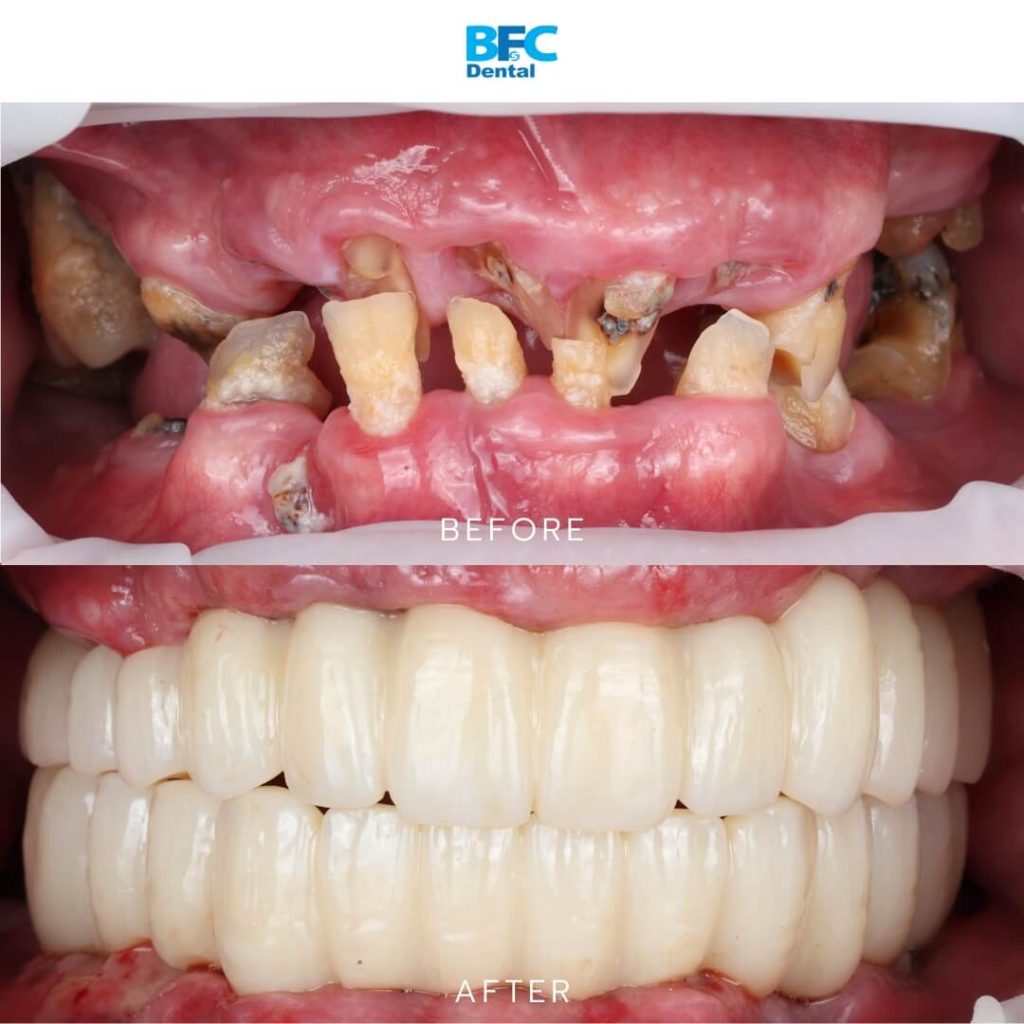
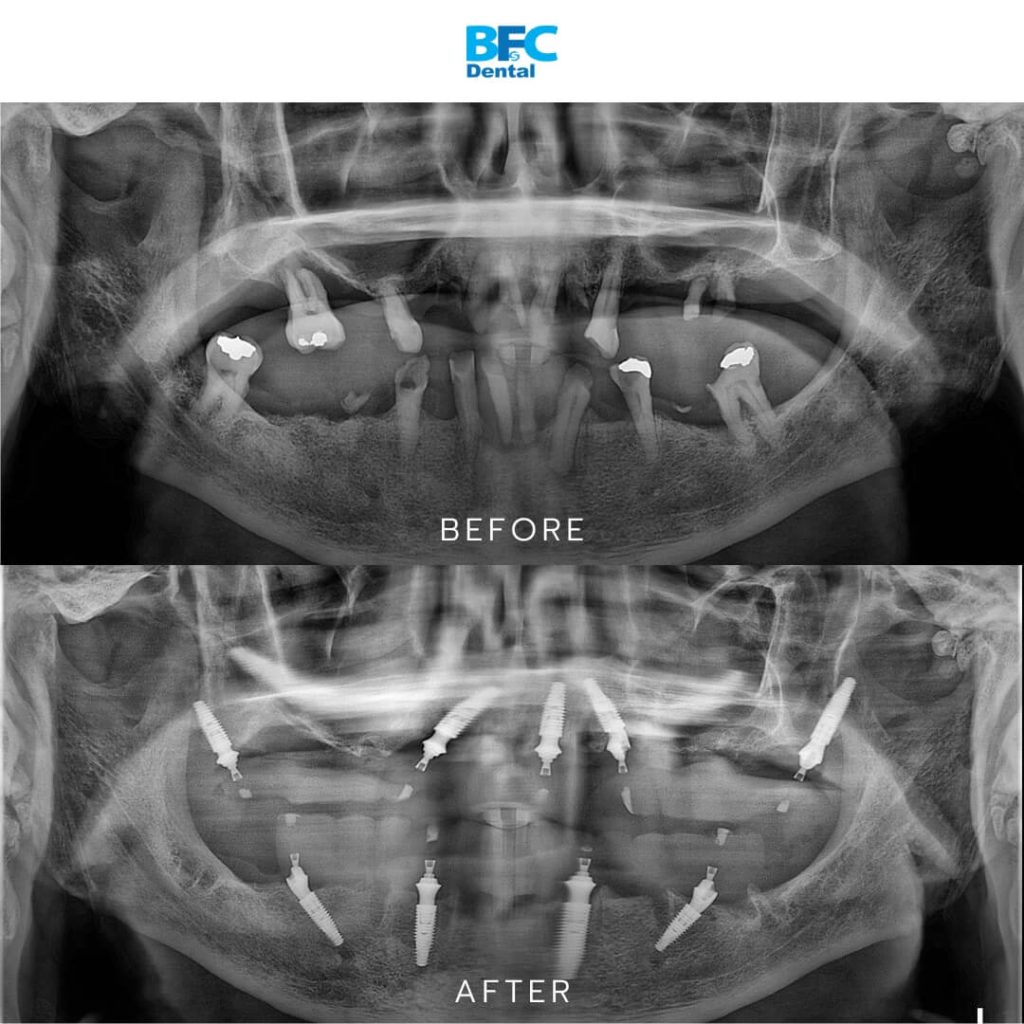
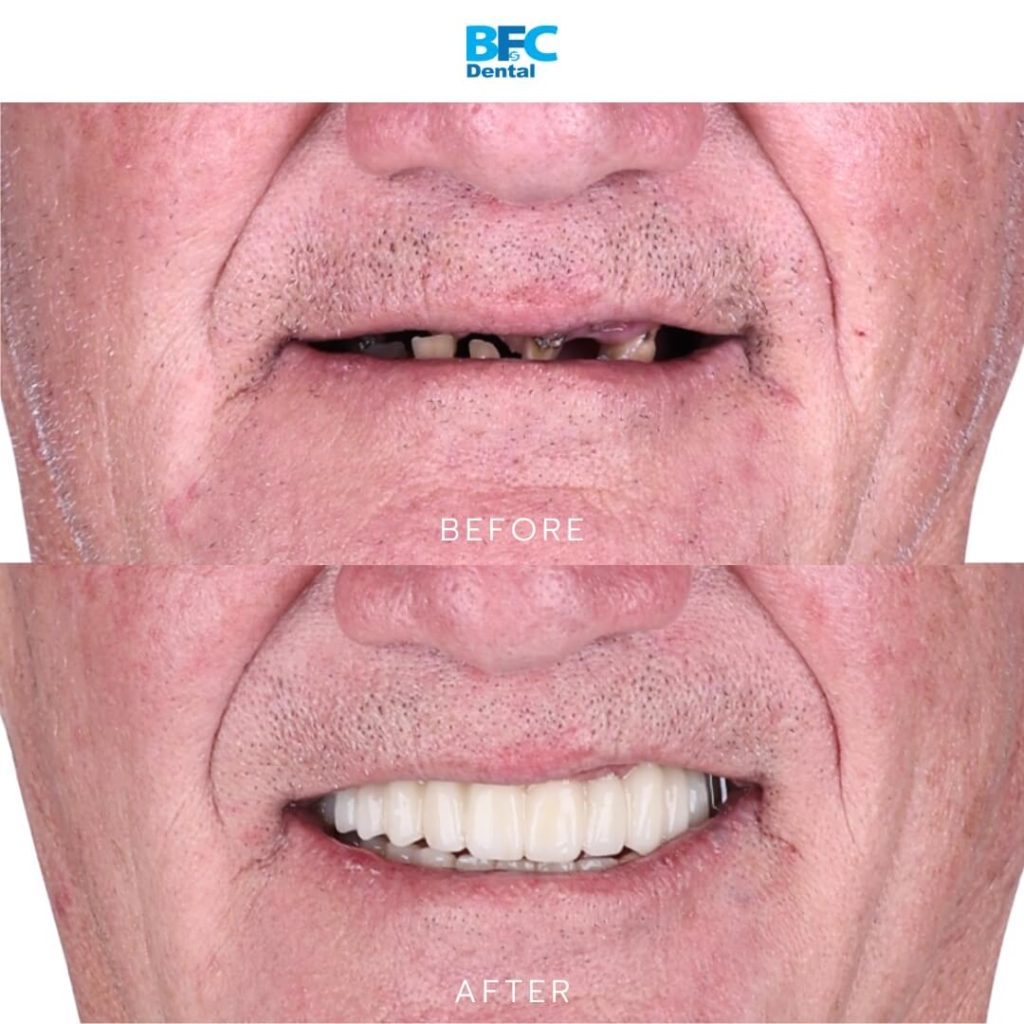
One of the clearest examples is a male patient who travelled from New Zealand to BFC Dental Implant Center. He arrived with years of accumulated oral health problems: severe tooth wear, infected teeth, multiple missing teeth and remaining natural teeth that were no longer usable. Most significantly, his upper jawbone was so thin that conventional implants were not an option.
The team planned a full arch reconstruction using pterygoid implants at the back of the upper jaw, which sidestepped the thin bone problem without any preliminary grafting. The entire case was mapped through a Digital Full Arch Workflow so that placement was as accurate and efficient as possible.
Treatment Details
- Five implants placed in the upper jaw and four in the lower jaw
- Fixed temporary bridges in premium Ivoclar acrylic, in function within 24 hours of surgery
- A patient who had been missing teeth for more than ten years, and who had previously been turned away because of insufficient bone, walked out with teeth he could actually use, in a short treatment window and with no bone grafting
Beyond chewing function, the result restored his confidence in his smile and brought back the facial support that years of tooth loss had taken away.
Your Neodent Implant Passport
Every patient leaves with a Neodent Implant Passport, an internationally recognised record of the implants placed, including brand, model, size, batch reference and the exact position of each implant. Any qualified dentist anywhere in the world can read it and identify your components through the global Straumann Group network, which matters a great deal when your treating clinic is in Bangkok and your routine checkups are in Auckland, Sydney or Los Angeles.
Frequently Asked Questions About Pterygoid Implants
Does a thin upper jaw always require bone grafting before implants?
No. It depends on how much bone remains and where. In cases where both the front and back sections of the upper jaw are severely thin, the dentist may choose an alternative technique such as pterygoid implants instead of grafting. Every case still requires individual assessment and diagnosis first.
Can pterygoid implants replace a sinus lift?
In many cases, yes. The implant anchors into the pterygoid plate, which sits behind the sinus cavity, so lifting the sinus floor becomes unnecessary. Whether this is the right substitute in your case is a clinical decision made after reviewing your scans.
Are there limitations, and is everyone a candidate?
This technique calls for a highly experienced implant dentist, because the pterygoid region sits near important anatomical structures at the skull base and demands precise planning. Suitability also depends on your bone condition, oral structure and general health, all of which the dentist evaluates before building an individual treatment plan.
How long does the full treatment take for an international patient?
The surgical phase plus fixed temporary teeth is generally completed within a single trip of about five to seven days. Patients return after four to six months of healing at home for the permanent Zirconia bridge.
If you have been turned down for implants because of thin jawbone, or you are looking for an option that does not involve waiting months for a graft to heal, BFC Dental Implant Center can assess your case and plan treatment using the technology and specialist techniques that make functional teeth possible again.