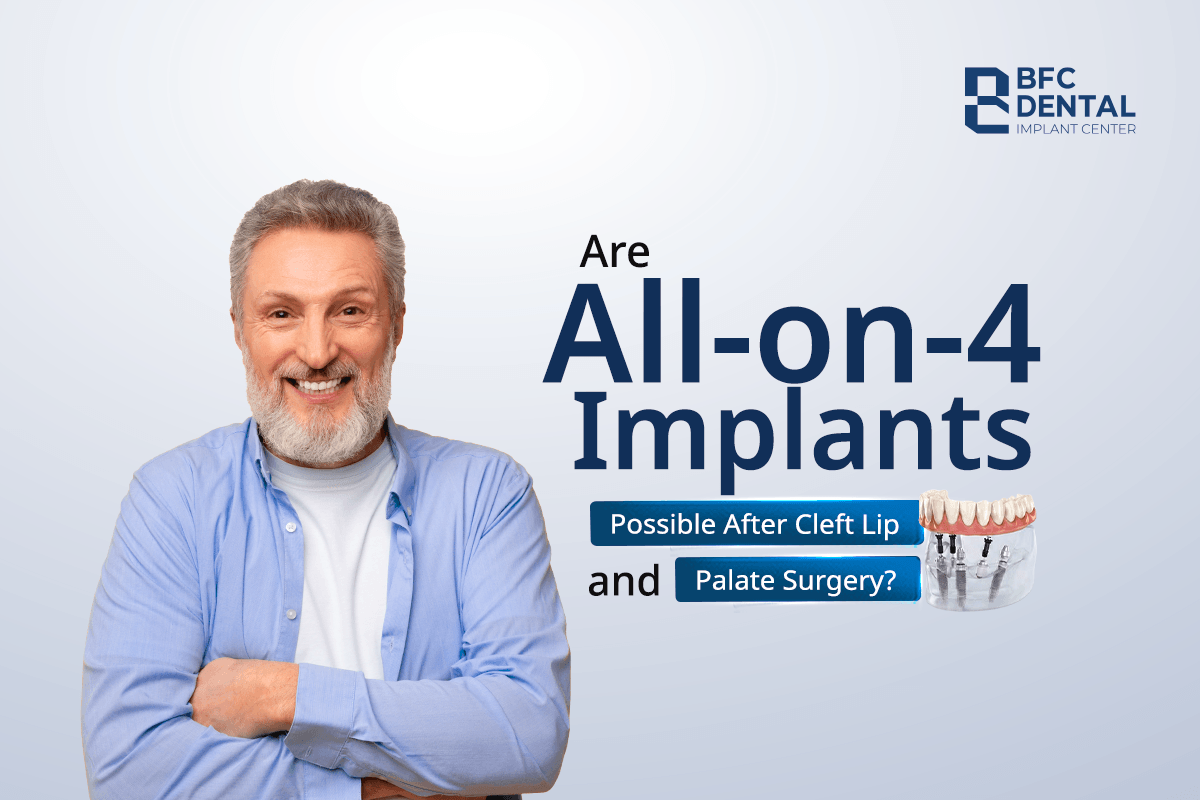
If you had cleft lip and palate surgery as a child and you are now losing your natural teeth, one question tends to come up before any other: can a jaw that has already been through surgery still support a full set of implants? It is a fair concern. Cleft repair usually leaves its mark on the upper jaw, both in bone thickness and in the shape of the ridge.
A Limited Jawbone Does Not Mean Full Mouth Implants Are Off the Table
The short answer is that treatment is possible, but it has to be planned carefully and it needs a specialised implant technique. People who underwent cleft repair in childhood often have an upper jaw that is thinner and less uniform than average, because surgical scarring in early life affects how the bone in that region grows.
Many of these patients also present with a Class III profile, where the lower jaw sits forward of the upper jaw. That happens for the same reason: the upper jaw had restricted growth from a young age.
With that anatomy, a standard implant plan may simply not work. Some areas of bone are too thin, and others carry a defect left by the original surgery. What that does not mean is that a bone graft is always required, or that full arch implants are impossible. It means the dentist must use a technique that works around the compromised areas and instead anchors into the bone that is still strong enough to carry the load.
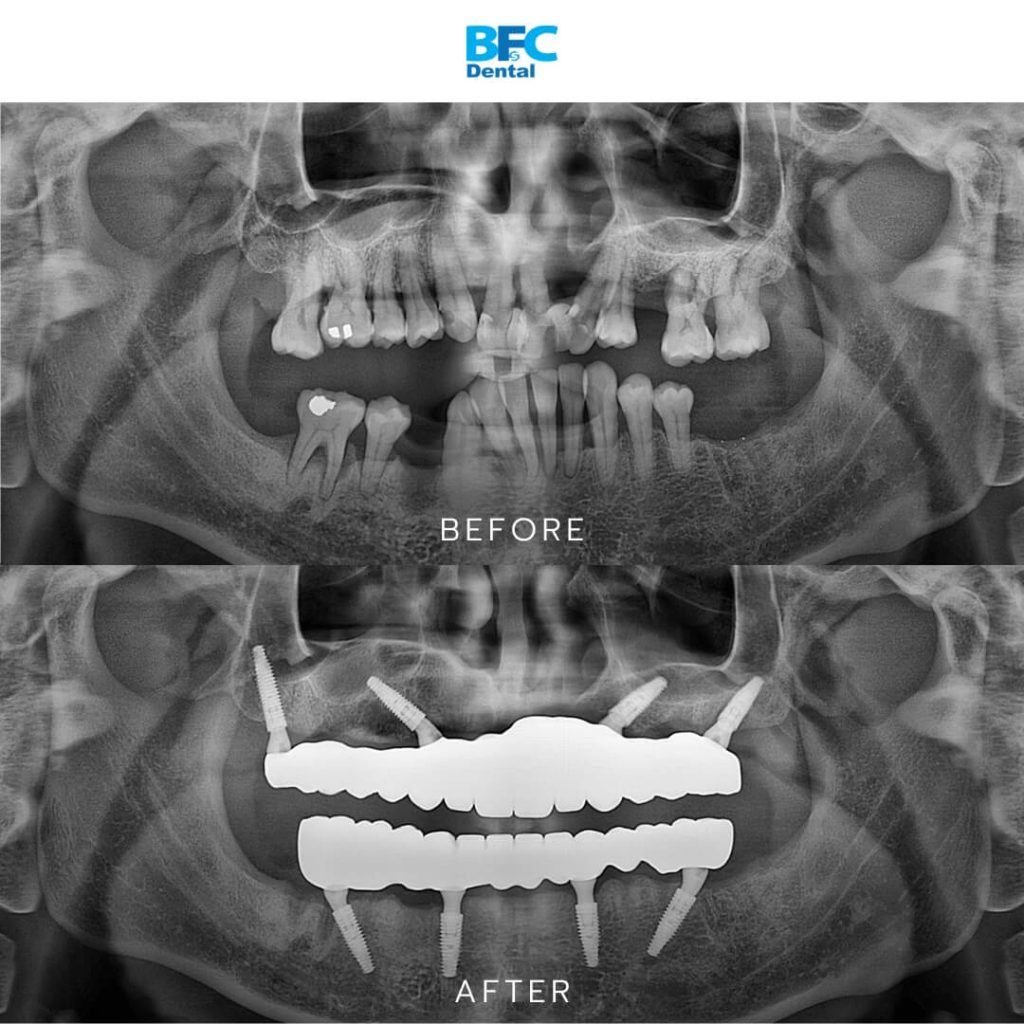
Why This Full Arch Case Used All-on-4 and Angled (Tilted) Implant Placement
A recent case at BFC Dental Implant Center involved a patient who had cleft lip and palate surgery in childhood. His upper jawbone was irregular and thinner than normal, combined with a Class III facial profile.
The team planned the case through a full digital workflow so the bone structure could be studied in detail before any surgery took place. That level of detail allows the implant position and the angle of each implant to be set precisely for the bone that patient actually has, rather than following a generic template. The plan used the All-on-4 technique together with tilted implant or pterygoid implant placement.
The principle behind the technique is straightforward. Four implants support a full arch per jaw, and the posterior implants are angled to steer clear of the areas weakened by earlier surgery, as well as important structures such as the sinus cavity. That angle lets the dentist engage denser bone with a longer implant, which in many cases removes the need for additional grafting, shortens overall treatment time and reduces the complexity of the surgery itself.
From Failing Teeth to Fixed Teeth Within 24 Hours
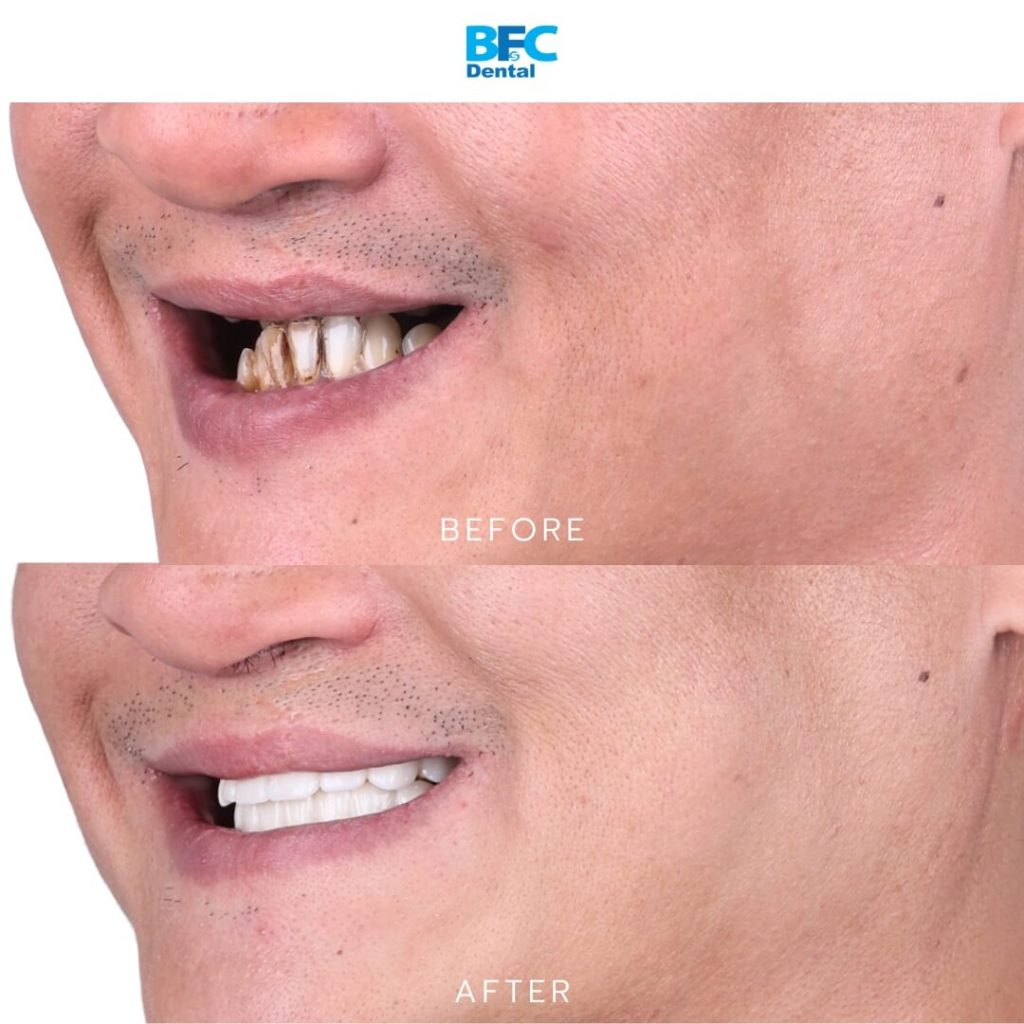
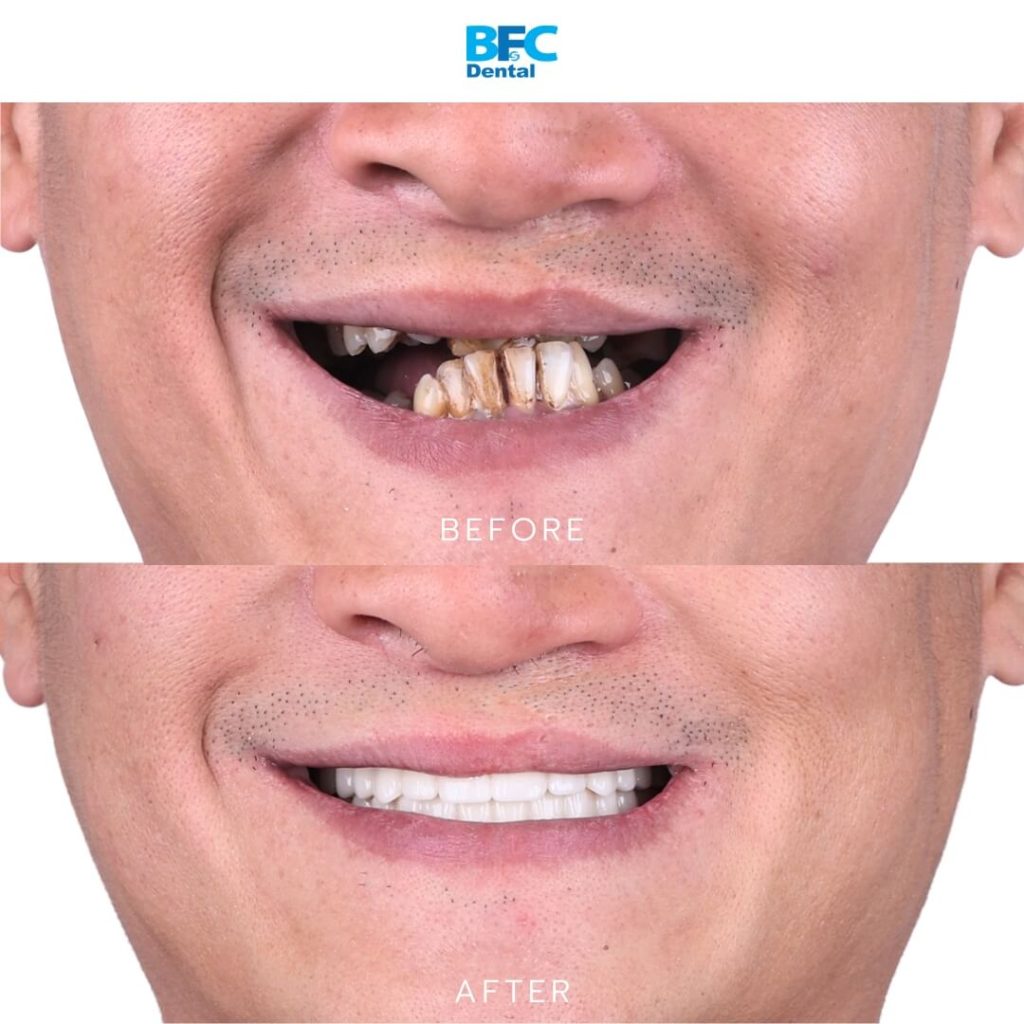
Before treatment, the patient had widespread decay, heavy wear and significant plaque buildup, which affected both his ability to chew and his confidence when he smiled.
Once the failing teeth were removed and the implants were placed according to plan, a fixed temporary bridge was fitted within 24 hours of surgery. The bridge was made from premium Ivoclar acrylic in an FP1 design, strong enough for daily use during the healing period.
Why the FP1 Design Matters
An FP1 bridge carries no artificial gum section. The teeth sit directly against the patient’s own gum tissue, which keeps the result looking close to natural teeth and means the bone ridge does not have to be reduced as aggressively as it would for other designs. It is also lighter and more comfortable to live with.
Upgrading to the Permanent Zirconia Bridge
Once the implants have fully integrated with the bone, which typically takes four to six months, the patient returns to exchange the temporary bridge for the definitive Zirconia ceramic bridge. Zirconia is significantly stronger under chewing load and delivers a more refined, natural appearance for the long run.
Key Advantages of This Treatment Approach
- All-on-4 with tilted implant or pterygoid implant bypasses the bone defects left behind by earlier cleft surgery
- Bone grafting can be avoided in many cases, which removes months from the timeline
- Fixed teeth are in place and functional within 24 hours of implant placement
- The FP1 design looks and feels closer to natural teeth than conventional full arch designs
- The temporary bridge is upgraded to a permanent Zirconia bridge once integration is complete
Lifetime Warranty Coverage
BFC Dental Implant Center provides lifetime warranty coverage across the three core components of your full arch restoration:
- Implant body: the titanium implant itself, covered for life
- Implant abutment: the connector between implant and bridge, covered for life
- Zirconia bridge: the permanent ceramic bridge, covered for life
For patients travelling thousands of kilometres for treatment, that coverage is part of the reason the decision feels safe rather than risky.
Frequently Asked Questions
How does a Class III bite affect full arch implant planning?
When the lower jaw sits forward of the upper jaw, the bite relationship between the two arches is unbalanced. Digital planning is used to calculate implant position and angle across both jaws together, so a new and properly aligned chewing relationship can be built into the final bridges rather than corrected afterwards.
Does thin bone from cleft palate repair always require grafting first?
Not always. It depends on how much bone remains and where it sits. If there are regions with adequate density, the dentist may use tilted implants or adjust the implant position instead of grafting, which reduces both complexity and treatment time. In cases where the bone really is severely deficient, grafting remains the right choice for long term stability.
What is FP1 and why is it recommended?
FP1 is a full arch prosthetic design that aims to look as close to natural teeth as possible. It has no artificial gum section, so the teeth rest against your own gum tissue. The result is lighter in the mouth, more comfortable, and it requires less reduction of the bone ridge than other designs. The appearance holds up well both when smiling and when speaking.
Can this treatment be completed as a dental tourism trip?
Yes. Most full arch patients complete the surgical phase and receive fixed temporary teeth on the first trip, then return after four to six months for the permanent Zirconia bridge. Our international patient team plans both visits around your travel schedule.
If you have had cleft lip and palate surgery in the past and you are weighing up full mouth implants, do not let concerns about your bone stop you from asking the question. With digital planning and specialised implant techniques, treatment can be designed around the bone you have. Book a detailed consultation and assessment at BFC Dental Implant Center and find out what is realistic in your case.