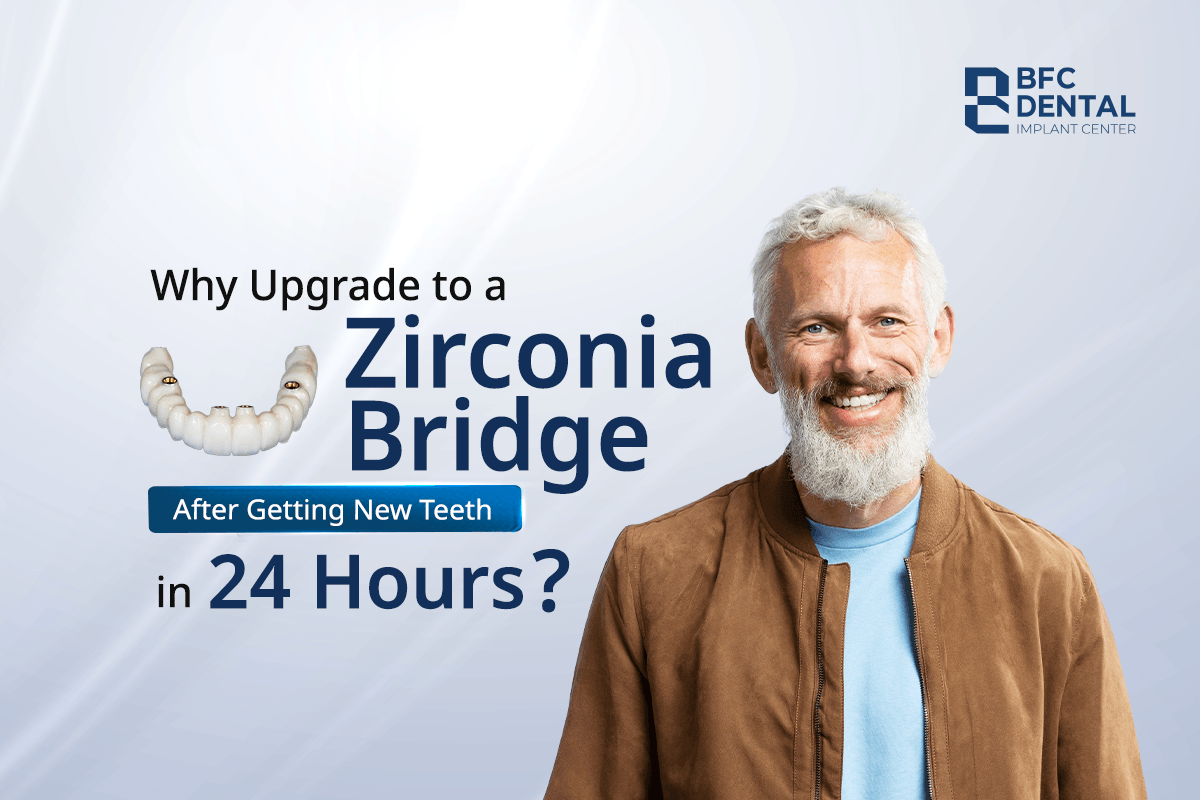
One of the biggest advantages of All-on-4 full mouth dental implants is walking out of the clinic with a brand-new fixed smile within just 24 hours. For many patients, it’s a life-changing moment. However, the first set of teeth you receive is not your final restoration. Instead, it is a carefully designed temporary bridge that protects your newly placed implants while they heal. After approximately four to six months, once the implants have fully fused with your jawbone, your dentist will replace it with a custom full zirconia bridge. This final restoration offers greater strength, exceptional durability, and a more natural appearance, providing the long-term function and aesthetics that make full mouth dental implants a lasting solution.
Teeth in 24 Hours: How Immediate Loading Works
Full mouth implant treatment with same-day teeth, also called Immediate Loading or Teeth in a Day, means the dentist places the implants and attaches a fixed bridge within 24 hours of surgery. Patients leave without a gap in their smile and can speak and eat soft foods right away.
This is made possible by a fully digital pre-treatment workflow at BFC Dental Implant Center:
- Digital treatment planning software analyses jaw bone structure in 3D, evaluates bone volume, identifies the sinuses and nerve pathways, and determines the optimal implant position before a single incision is made.
- A personalized Digital Surgical Guide is used during surgery to execute the plan with pinpoint accuracy which are controlling position, angle, and depth for every implant, keeping incisions small, reducing tissue trauma, and accelerating recovery.
Why Do You Wear a Temporary Bridge First?
Even though the fixed bridge is placed within 24 hours, the material used at this stage is intentionally temporary. BFC Dental Implant Center uses premium Ivoclar acrylic (Ivotion) for the initial bridge for three important clinical reasons:
- Lightweight and slightly flexible: These properties reduce the direct load and impact transmitted to freshly placed implants, protecting the healing bone-to-implant interface during the critical early months.
- Accommodates gum remodeling: As the implants integrate, the surrounding gum tissue naturally reshapes. The temporary bridge supports and guides this process while the final bridge design is being planned.
- Intentionally limited lifespan: Acrylic is less resistant to long-term wear, staining, and fracture than ceramic. It is designed to serve its purpose for 4 to 6 months, not designed for long-term wear.
Real Patient Case: Australian Patient with Advanced Gum Disease and Bone Loss
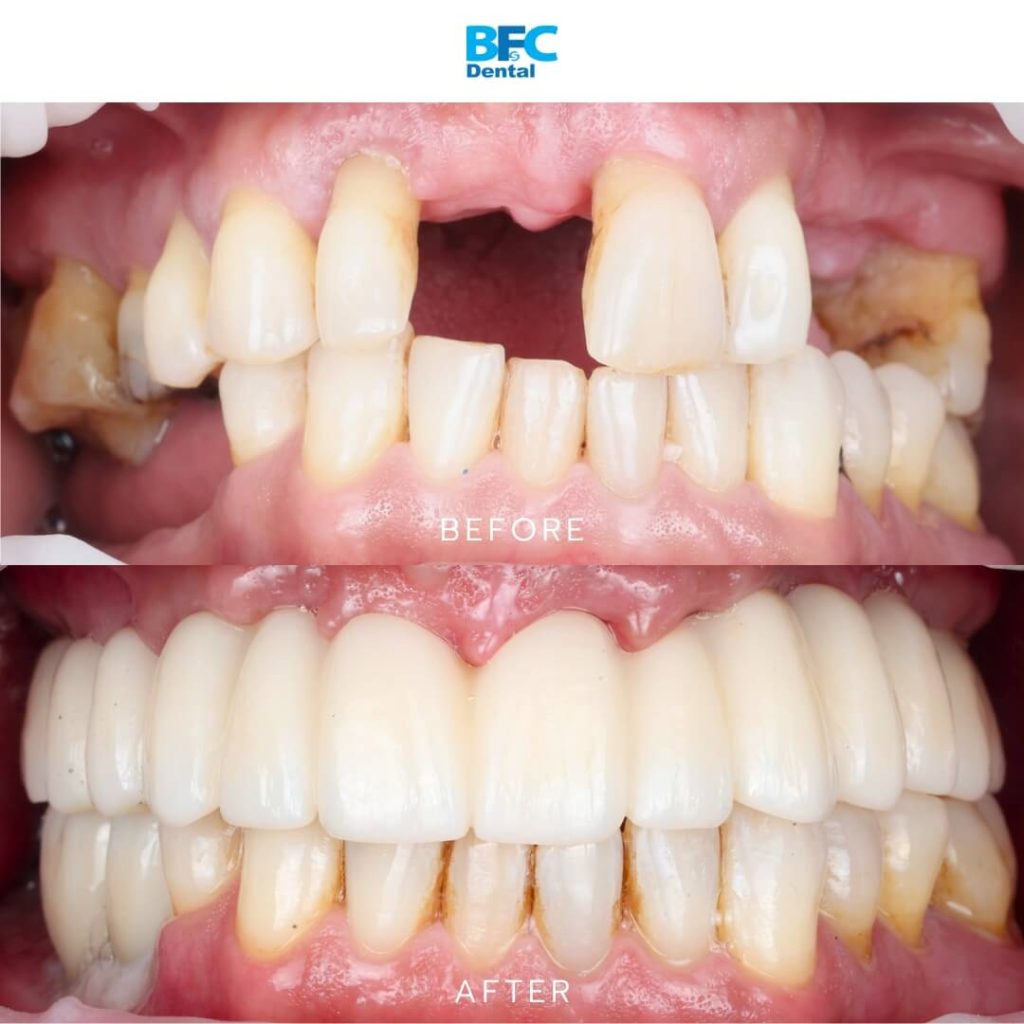
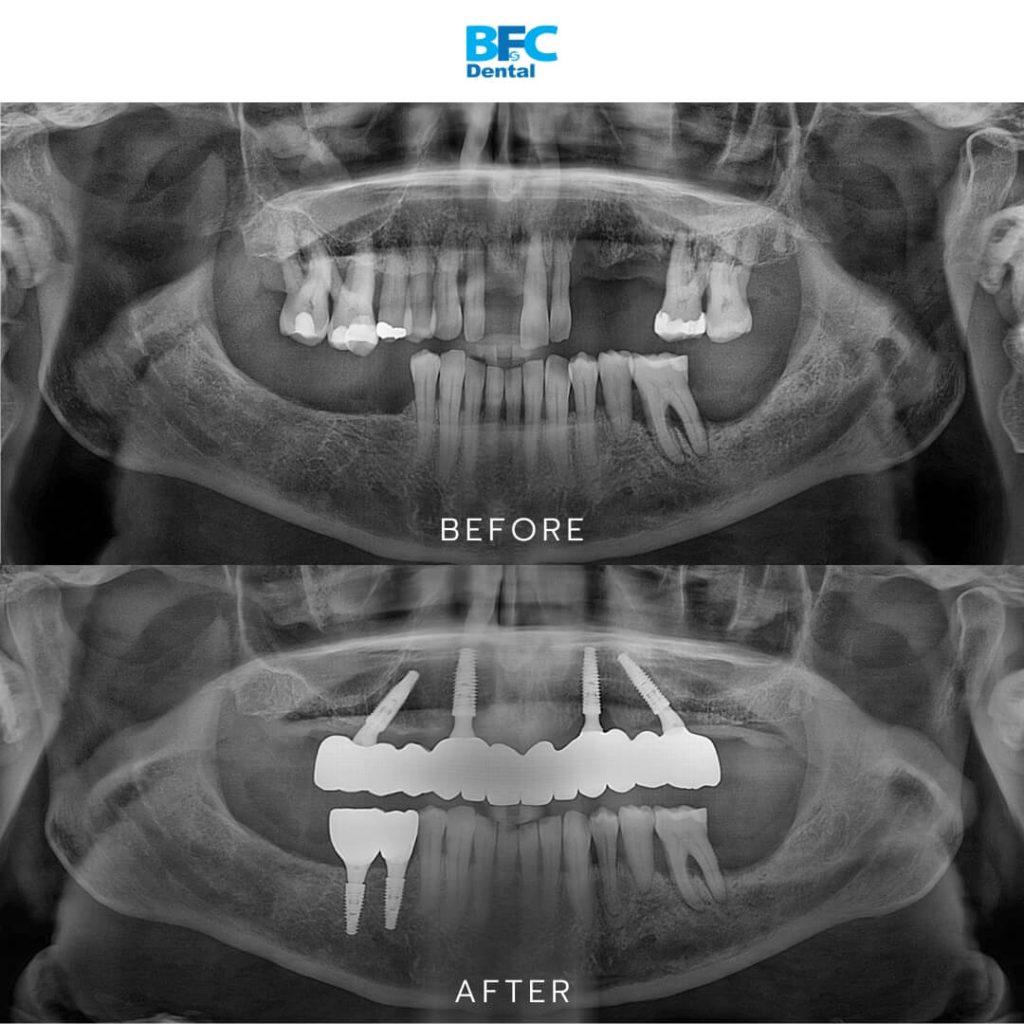
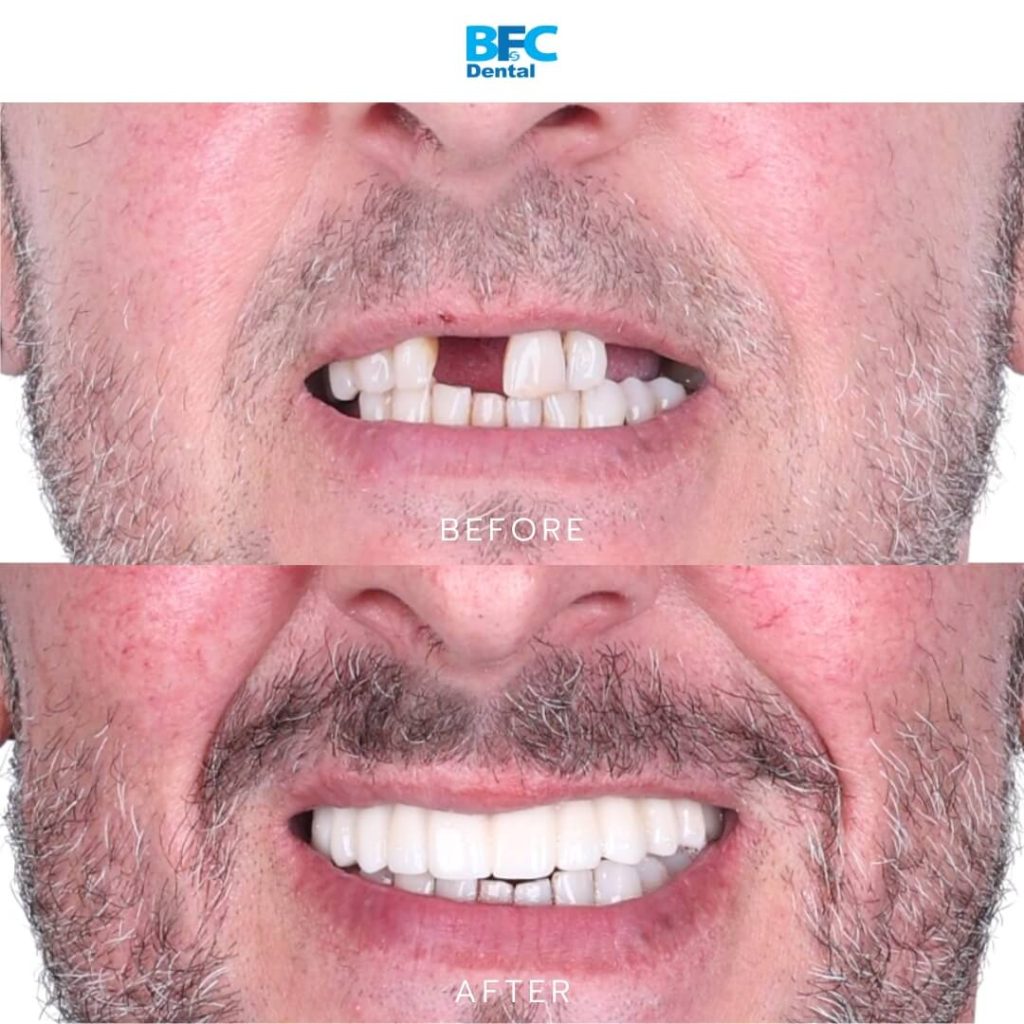
Among the many international patients who trust BFC Dental Implant Center for full mouth restoration, one recent case involved a patient who flew in from Australia with advanced gum disease, multiple missing teeth, and significant jawbone loss, all of which had severely impacted both chewing ability and confidence.
The BFC Dental team used a full digital workflow to plan and execute the entire treatment with precision, even with the bone loss present. The treatment plan:
- Upper jaw (top teeth): Four implants placed in areas of sufficient bone density to avoid the need for bone grafting.
- Lower jaw (bottom teeth): Two additional single implants to replace specific missing teeth.
- Fixed bridge within 24 hours (Immediate Loading): Immediately after surgery, a fixed temporary bridge made from premium Ivoclar acrylic was attached. The patient was able to eat soft foods and resume daily activities right away.
Why Wait 4–6 Months Before Getting a Zirconia Bridge?
Many patients ask why they cannot receive their zirconia bridge immediately. The answer lies in a biological process called osseointegration.
After approximately 4 to 6 months, the patient returns for the final bridge upgrade. The wait is not arbitrary; it reflects one of the most important biological processes in implant dentistry: osseointegration.
During this phase, jawbone cells gradually grow into and around the implant surface, locking it permanently in place. This process requires a stable, low-stress environment. Placing a heavy, rigid final bridge too early would transmit full chewing forces directly through the implants before the bone has had time to fully bond, risking the entire treatment outcome. Waiting for complete osseointegration is what makes the final result last a lifetime.
Why Zirconia Is the Best Choice for Your Final Bridge?
Once the implants are fully integrated, the temporary acrylic bridge is replaced with a Zirconia FP1 bridge, a restoration that delivers on every dimension a long-term smile demands.
- Natural aesthetics: Zirconia’s inherent translucency closely mimics the light-reflecting properties of natural enamel. Combined with the FP1 gum-free design, which rests directly on real gum tissue with no bulky pink acrylic base, the result is a seamless, natural-looking smile that draws no attention to itself.
- Maximum strength: Zirconia is one of the hardest dental materials available, providing excellent resistance to chipping, cracking, and the daily forces of chewing.
- Superior hygiene: The non-porous, ultra-smooth surface of Zirconia resists plaque and bacterial accumulation far better than acrylic, reducing the risk of gum inflammation around the implants and helping to maintain fresh breath.
- Colour stability: Unlike acrylic, Zirconia does not absorb pigments from food or drinks, meaning your smile stays white and natural-looking throughout its entire service life.
Why International Patients Choose This Two-Visit Treatment Plan
Receiving fixed teeth within 24 hours is an important milestone, but it is only the first stage of your smile transformation.
After your implants have completely integrated with your jawbone, upgrading to a custom zirconia FP1 bridge provides the strength, comfort, aesthetics, and longevity needed for decades of confident smiling and eating.
For patients with multiple missing teeth, advanced gum disease, or severe tooth loss, this staged approach offers the safest and most predictable path to a permanent smile.
At BFC Dental Implant Center, every full mouth implant treatment is planned using a comprehensive digital workflow and personalized for each patient’s anatomy and lifestyle. Whether you’re travelling from Australia, New Zealand, the United States, or elsewhere, our experienced team can help you restore your smile with confidence.
Frequently Asked Questions
Q: Can I eat normally after receiving my temporary bridge?
During the first four to six months, we recommend eating a soft diet while your implants heal and integrate with the jawbone. Once your final zirconia bridge is placed, most patients can return to a much wider variety of foods.
Q: What is the difference between an FP1 and FP3 bridge?
An FP1 bridge replaces only the teeth and is designed to emerge naturally from your own gums without artificial pink gum material.
An FP3 bridge replaces both the teeth and lost gum tissue using a pink prosthetic base. The most suitable design depends on your bone and soft tissue condition.
Q: How many trips to Thailand are needed for full mouth dental implants?
Most international patients require two visits.
The first visit includes implant placement and delivery of fixed temporary teeth within 24 hours.
After four to six months of healing, patients return for their custom zirconia bridge, which serves as the final long-term restoration.