Losing natural teeth does not only affect chewing. It also triggers gradual changes in the jawbone, facial structure, and overall health that many people do not notice until they become difficult to reverse.
Because removable dentures are simple and affordable, many patients choose them as the first solution after tooth loss. However, what is often intended as a temporary option can end up being worn for many years, sometimes decades, creating problems that slowly worsen over time.
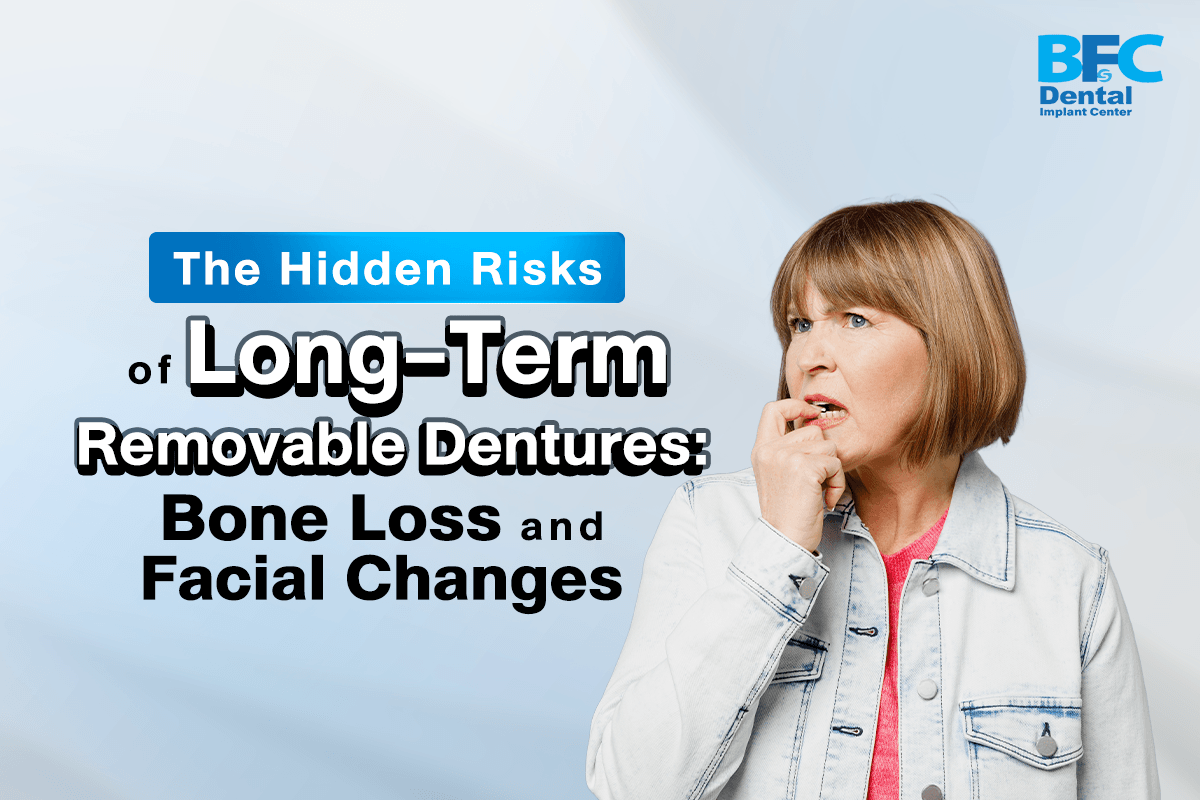
What many people do not realize is that long-term removable denture use can quietly accelerate bone loss and facial aging.
Why Removable Dentures Were Never Meant to Be a Permanent Solution
In dentistry, removable dentures have always been considered a temporary or transitional option. They can restore some appearance and partial chewing function, but they have one fundamental limitation that makes them unsuitable as a permanent fix: they sit on top of the gums and have no connection to the jawbone whatsoever.
This distinction matters enormously. Natural tooth roots continuously stimulate the jawbone through the forces of chewing, and that stimulation is what keeps the bone dense and intact. Removable dentures cannot replicate this. Over time, the absence of that stimulation triggers a slow but relentless process of bone resorption and once bone is lost, the consequences ripple far beyond the mouth.
Three Major Problems Caused by Long-Term Denture Use
- Jawbone Deterioration
Without tooth roots transmitting chewing forces into the jaw, the bone in the edentulous areas gradually dissolves. The body essentially reabsorbs bone it no longer perceives as necessary. This process begins almost immediately after tooth loss and continues for as long as the bone goes unstimulated.
What makes this worse is that ill-fitting dentures, which become increasingly loose as the bone shrinks beneath them. This can create uneven pressure on the gum tissue, actually accelerating the rate of bone loss rather than slowing it.
- Facial Collapse and Premature Aging
This is the consequence that surprises patients most, and it is entirely preventable with the right treatment. As the jawbone resorbs over the years, the structural foundation that supports the lower face gradually disappears, leading to a series of visible changes.
The chin begins to jut forward and move closer to the nose as the vertical height of the lower face decreases. The cheeks hollow out and the lips thin as the underlying bone no longer provides support for the overlying skin and muscle. Deep lines and wrinkles form around the mouth, and the overall effect can make a person appear anywhere from ten to twenty years older than their actual age.
This is not simply a cosmetic concern. It reflects the degree to which the internal architecture of the face has been compromised.
- Declining Chewing Efficiency and Its Whole-Body Effects
Removable dentures deliver only about 20 to 30 percent of the chewing force that natural teeth provide. As the fit deteriorates over time, even that limited capacity diminishes further. The effects extend well beyond the mouth:
Poor chewing means food is swallowed in larger, less-processed pieces, placing extra burden on the stomach and intestines and increasing the likelihood of bloating, discomfort, and chronic digestive issues.
Many older adults with ill-fitting dentures unconsciously restrict their diet to soft, easy foods, avoiding vegetables, proteins, and other nutritious options, leading to nutritional deficiencies and a weakened immune system.
Perhaps most concerning, research has linked poor chewing efficiency to reduced blood flow to the brain, with associations found between tooth loss and an elevated risk of cognitive decline, including Alzheimer’s disease and dementia.
Why Full Mouth Dental Implants Offer a Better Long-Term Solution
The most effective way to halt bone loss, preserve facial structure, and restore full chewing function is to replace not just the visible teeth, but the roots beneath them. Dental implants are made from titanium and are designed to integrate directly with the jawbone, functioning exactly as natural roots do — transmitting chewing forces back into the bone and keeping it stimulated, dense, and intact.
How All-on-4 Helps Patients with Bone Loss
For patients who have already experienced significant bone loss after years of denture use, All-on-4 full-arch implants at Thailand Dental Implant Center offer a particularly well-suited solution.
No bone grafting required in most cases — The angled implant placement technique used in All-on-4 finds the densest, most stable areas of remaining bone, bypassing the sections that have already resorbed. This means the majority of patients, even those with considerable bone loss can proceed directly to implant placement without the added time and cost of bone grafting.
Precision-guided placement — Every case at Thailand Dental Implant Center is carried out using a full digital workflow, from 3D scanning and digital treatment planning through to guided surgical placement. The result is smaller incisions, less post-operative discomfort, and a faster, more predictable recovery.
A genuinely worthwhile long-term investment — While the upfront cost of implants is higher than removable dentures, the comparison is not quite fair when viewed over a lifetime. Removable dentures need to be replaced regularly as the fit changes, require adhesives to stay in place, and carry the ongoing anxiety of slipping at inconvenient moments. Implants, by contrast, are permanent, stable, and designed to last for decades with straightforward maintenance.
Do Not Let Dentures Quietly Change Your Face Over Time
The effects of removable dentures often happen gradually, which is why many patients do not realize the damage until major bone loss has already occurred.
If your dentures feel loose, uncomfortable, or if you notice facial changes, it may be time to consider a more stable long-term solution. Modern implant dentistry can often restore both function and facial balance, even after years of denture use. A healthier smile is not only about teeth. It is also about protecting the structure that supports your face for years to come.