If you are dealing with significant tooth loss, or you have been living with removable dentures that slip, limit what you can eat, and quietly chip away at your confidence, full mouth dental implants are likely the most life-changing treatment you can pursue. But once patients start researching their options, a common question comes up: should I choose All-on-4 or 3-on-6? And what is the actual difference?
This guide answers the questions patients ask most often — starting with the basics, then breaking down the key differences between the two systems so you can have an informed conversation with your implant specialist.
The Questions Patients Ask Most Before Full Mouth Implant Treatment
- Is the procedure painful?
Most patients are surprised to learn that the procedure is not painful during treatment. Local anesthesia is used to completely numb the area. For patients with dental anxiety, Nitrous Oxide sedation can help you feel calm and relaxed throughout the procedure. At BFC Dental Implant Center, patient comfort is a top priority, especially for full mouth cases.
- How long does it take to get new teeth?
With a full digital workflow, most patients receive a fixed, functional temporary bridge within 24 hours of surgery. This is what is commonly referred to as Teeth in a Day. You do not leave the clinic toothless and you do not wait months for something to bite on.
- How long do full mouth implants last?
When oral hygiene is well maintained and regular check-ups are kept, full mouth implants with a fixed bridge can last anywhere from 10 to 20 years — and in many cases, for life. A lifetime structural warranty on the implants themselves provides additional peace of mind for patients investing in this level of treatment.
All-on-4 vs 3-on-6: What Is the Difference?
The main difference between these two techniques lies in:
- Number of implants used
- Bone requirements
- Force distribution
- Maintenance and repair
Bone volume: which treatment protocol works with what you have?
This is usually the first factor your implant specialist will assess, because jaw bone density and volume vary significantly from person to person, particularly after years of gum disease or tooth loss.
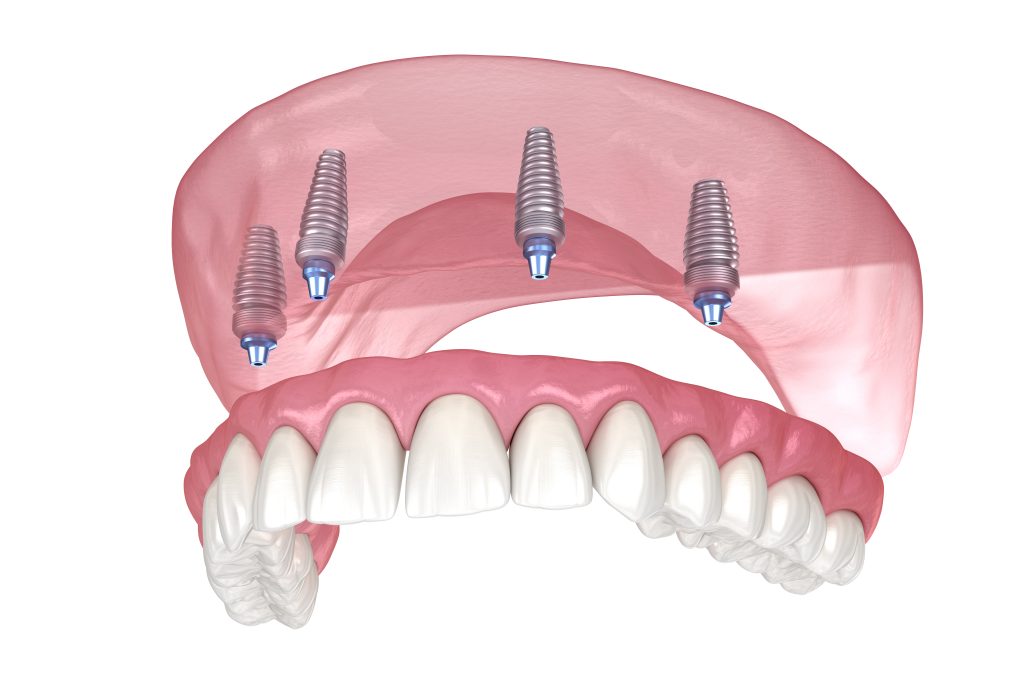
- All-on-4 was specifically designed for patients who have experienced substantial bone loss, particularly in the back sections of the jaw. By angling the two rear implants at approximately 30 to 45 degrees, the surgeon can reach denser, more intact bone further forward in the arch, bypassing areas of significant resorption, sinus cavities, and nerve pathways. In most cases this eliminates the need for bone grafting entirely, which saves both time and cost.
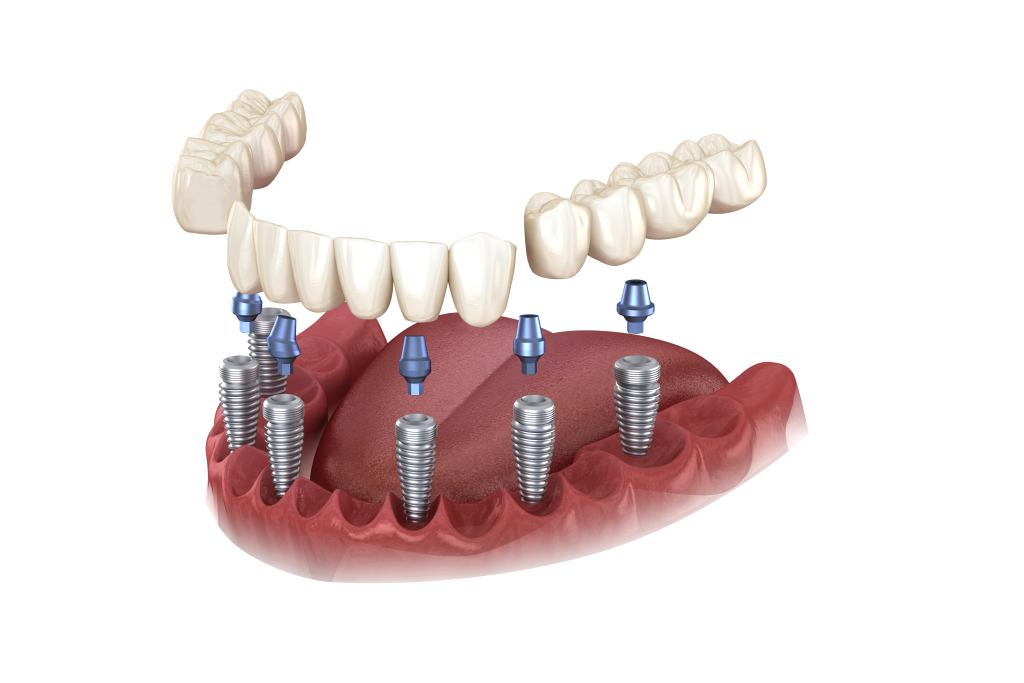
- 3-on-6 uses six implants per jaw distributed across three separate bridge sections. Because more implants are placed across a wider range of positions, the bone needs to be sufficiently thick and tall at each site. Patients with significant bone loss may require bone grafting before 3-on-6 treatment can proceed, which adds stages to the treatment timeline and increases overall cost.
If your bone volume is limited, All-on-4 is almost always the more practical route. If your bone is in good condition, both options become viable and the decision shifts to other factors.
Chewing force: which technique distributes load more effectively?
More implants naturally mean more distribution points for chewing load, and this is where 3-on-6 has a structural advantage.
With six implants supporting the bridge, chewing forces are spread more evenly across the jaw — similar to having six foundation pillars rather than four. This reduces the stress concentrated on any single implant and provides excellent long-term bone preservation at each implant site.
All-on-4 concentrates load across four points, which requires precise planning to ensure the force distribution is as balanced as possible. The angled rear implants increase the surface area of bone contact and widen the effective support base, which is sufficient for normal everyday function in the vast majority of patients. The planning and execution demand a higher level of surgical precision, which is why digital guided surgery is standard for All-on-4 cases at Thailand Dental Implant Center.
For patients who eat a varied, demanding diet and have the bone to support it, 3-on-6 may offer marginally better long-term load management. For patients where bone is the limiting factor, All-on-4 delivers fully adequate function with none of the complications of grafting.
Maintenance and repairability: which is easier to live with long term?
This is a difference many patients are not aware of until they ask and it matters more than most people expect.
- The 3-on-6 bridge is divided into three separate sections per jaw. If one section is ever damaged — a chip, a crack, or wear over many years, only that section needs to be removed and repaired or replaced. The other two sections remain in place. This segmented design also makes cleaning somewhat more accessible, as the gaps between sections allow better reach for water flossers and cleaning aids.
- All-on-4 uses a single one-piece bridge per jaw. If any part of that bridge requires repair, the entire arch typically needs to be removed and sent to the laboratory. This is not a frequent occurrence, but it is worth understanding before you commit to the system.
How to choose between All-on-4 and 3-on-6
All-on-4 is the stronger choice if you have significant bone loss and want to avoid bone grafting, if you are working within a tighter timeline or budget, or if you are an international patient who needs the surgical phase completed efficiently in one trip.
3-on-6 is the stronger choice if your bone is in good condition and you want maximum load distribution, if the segmented design and easier repairability are priorities for you, or if you want the closest approximation to natural individual tooth feel across the arch.
Ready to Find Out Which Option Is Right for You?
Whether you are considering All-on-4, 3-on-6, or simply want to understand your options after years of gum disease and tooth loss, the team at Thailand Dental Implant Center is here to help and you do not need to be in Bangkok to get started.
Send us your existing X-rays or CT scan and our specialist team will provide a free remote assessment, giving you a clear picture of your treatment options, timeline, and costs before you commit to anything.
We work with international patients from Australia, New Zealand, the USA, the UK, and beyond every day. From airport transfer and accommodation to surgery and aftercare, everything is coordinated so your trip is as smooth and stress-free as possible.
Contact us today at Thailand Dental Implant Center and take the first step toward a smile that feels and functions like your own again.