People who have lived with dental problems for years tend to arrive at the same question: can these teeth still be saved, or is it time for a different plan? If several of your teeth are no longer in a condition worth keeping, that is usually a sign to look at a solution covering the whole arch rather than another round of individual repairs. All-on-4 full mouth implants are one of the most practical options available, because they rebuild the entire jaw with a fixed bridge.
What Is All-on-4 and Why Do So Many Patients Choose It?
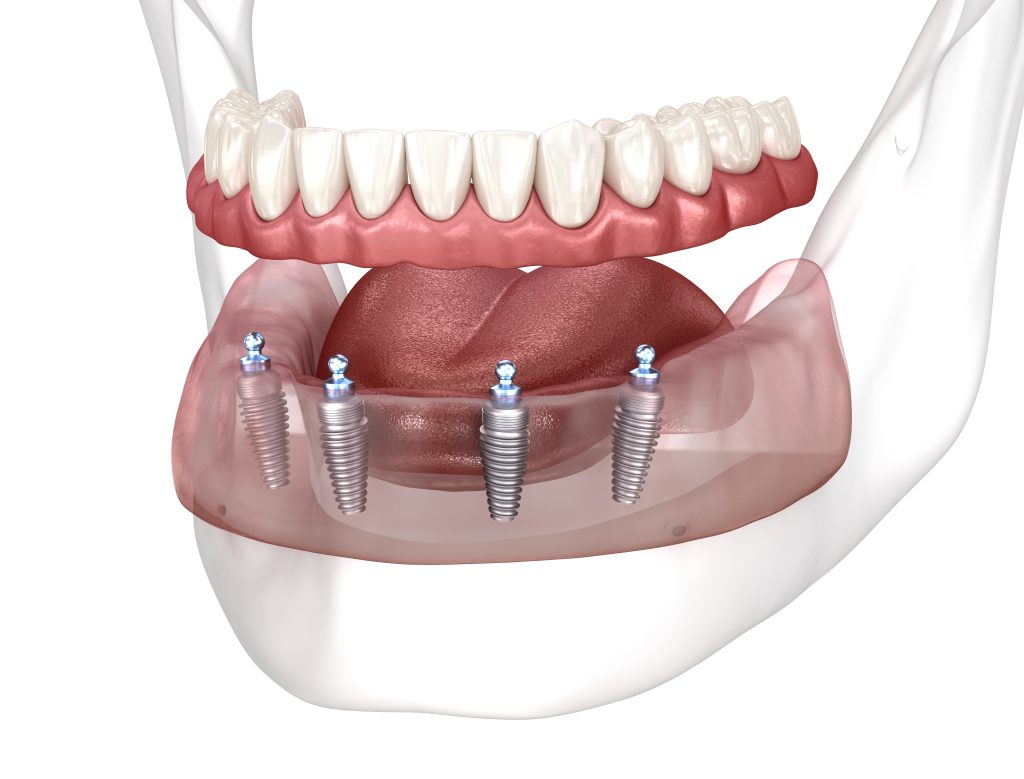
All-on-4 is a full arch implant technique in which four implants support a fixed bridge across the entire jaw, rather than placing one implant for every missing tooth. Its main strength is flexibility: even when jawbone volume is reduced, the dentist can position the implants where bone density is still adequate, guided by computerised planning. That is why many cases proceed without additional bone grafting surgery, and why a fixed temporary bridge can usually be fitted within 24 hours of implant placement.
5 Signs It May Be Time to Consider All-on-4 Dental Implants
1. Several Loose Teeth
Teeth that have become mobile because the supporting bone has largely dissolved are telling you that the roots can no longer hold securely. When mobility is spread across several teeth in the same jaw, repairing them one at a time rarely delivers a result that lasts.
2. Advanced Periodontal Disease
Once gum disease has progressed far enough to destroy the bone around the roots, teeth that were once solid begin to loosen because the foundation underneath them is gone. Even when the gum infection is brought under control, some teeth never regain enough strength to be used reliably again.
3. Multiple Missing Teeth
Losing several natural teeth, particularly front teeth or molars, affects chewing, speech and facial appearance, since there is nothing left supporting the structure and the face can look collapsed. The longer the situation continues, the more the jawbone in that region keeps resorbing. Remaining teeth then start to tip or drift into positions that cause further problems down the line.
4. Repeatedly Failing Crowns
Crowns that fracture, come loose, or have served so long that the tooth structure underneath has decayed beyond restoration are a clear warning sign. When that happens on several teeth at once, redoing crowns individually stops being worth the money compared with looking at a full arch option.
5. Problems With Removable Dentures
Patients wearing removable dentures often report the same complaints: looseness, slipping while speaking or eating, and chronic irritation where the denture presses on the gums. This group is usually looking for something more stable and much closer to natural teeth in daily use.
One Problem Does Not Mean Losing Every Tooth
It is important to be clear about this: having one of the signs above does not automatically mean a full clearance. The dentist assesses every tooth individually, looking at the strength of the supporting bone, the position of the tooth and whether restoration is realistic. Teeth that can be kept are often treated separately alongside the main plan.
When Does Full Arch Treatment Make More Sense Than Replacing Teeth One by One?
Tooth by tooth restoration, such as a single implant or a crown, suits situations where only a few teeth are missing and the neighboring teeth remain healthy. Once the problem spreads across most of an arch, repairing individually tends to fall short on value, time and long-term outcome, because the more implants you place, the higher the cost and the more complex the ongoing maintenance becomes.
What the Dentist Weighs Up
The decision is not based on the number of teeth lost alone. The assessment brings together remaining jawbone volume, overall gum health, the number and position of teeth still functioning well, and the patient’s own goals and lifestyle. The aim is a plan that delivers the best chewing performance and the best long-term value for that individual. The better option depends on the condition of the remaining teeth rather than simply how many teeth are missing.
Your Neodent Implant Passport and Lifetime Warranty
Every patient who completes full arch treatment at BFC Dental Implant Center receives a Neodent Implant Passport. This internationally recognised document records the brand, model, size and position of each implant placed, so any dentist in the world can identify your components for future maintenance through the global Straumann Group network.
Treatment also carries lifetime warranty coverage on three components:
- Implant body
- Implant abutment
- Zirconia bridge
FAQ: When Should You Consider All-on-4?
I still have some natural teeth. Can I still have All-on-4?
Yes. Where the remaining natural teeth are in poor condition or can no longer be restored, for example severe mobility caused by gum disease, the dentist may recommend removing the compromised teeth and treating that jaw with All-on-4. Healthy teeth in the opposing jaw may not need the same approach at all.
Is it better to save natural teeth or extract them and do All-on-4?
That comes down to individual assessment. If a tooth still has enough bone support and can be restored, keeping it is normally the first choice. If the tooth can no longer be made stable again, extraction followed by full arch implant treatment usually delivers better value and a more durable result over time.
Can I have All-on-4 with severe gum disease?
Generally yes, but the dentist must first control and treat the gum inflammation to reduce the risk of infection around the implants later. The remaining bone volume is then assessed so implant positions can be planned appropriately.
How quickly will I have teeth again?
A fixed temporary bridge is usually fitted within 24 hours of implant placement, so you do not leave without teeth. The permanent Zirconia bridge follows once the implants have integrated, typically four to six months later.
If you recognise one or more of these signs, do not wait until it starts affecting your daily life. Book an assessment at BFC Dental Implant Center to have your teeth and jawbone evaluated and a treatment plan built around your individual situation.