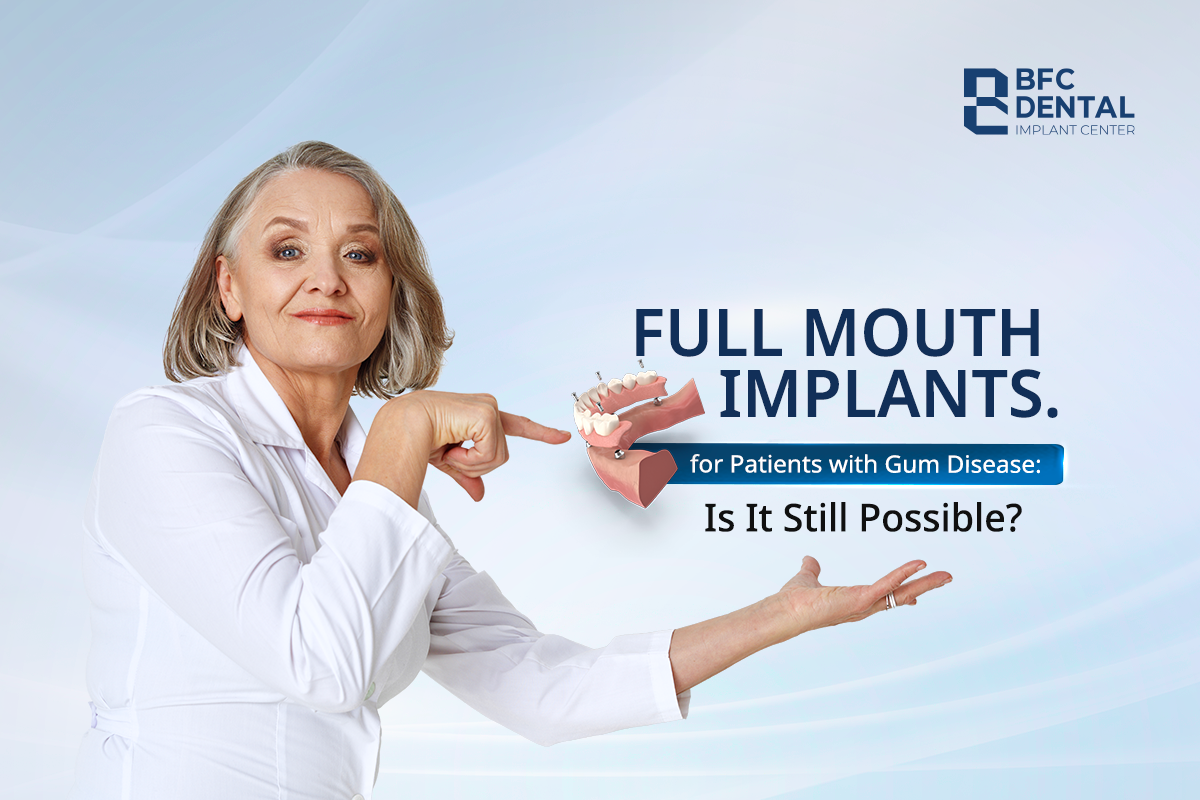
Being told your bone has dissolved significantly does not automatically mean implants are off the table. What it does mean is that the planning needs to be more thorough and the dentist needs to be experienced with complex cases.
Severe gum disease (advanced periodontitis) is the leading cause of adult tooth loss globally. It is also one of the most common reasons patients arrive at implant consultations believing their situation is hopeless. They have been told their bone is gone, their teeth are failing, and there is nothing left to work with.
That conclusion is often premature. Here is an honest overview of what advanced gum disease does to teeth and bone, what treatment planning for implants in these cases actually involves, and what outcomes realistically look like.
Key Takeaways
- Severe gum disease does not automatically mean you cannot have full mouth dental implants.
- Advanced periodontitis can destroy the bone supporting the teeth, causing loose teeth, gum recession, infection, and eventual tooth loss.
- Teeth with severe mobility, extensive bone loss, or persistent infection may need to be removed before implant rehabilitation.
- Full mouth implant treatment must be individually planned according to the amount and quality of remaining jawbone.
- A fixed temporary bridge may be placed within 24 hours after implant surgery.
How Does Severe Gum Disease Affect Your Teeth and Jawbone?
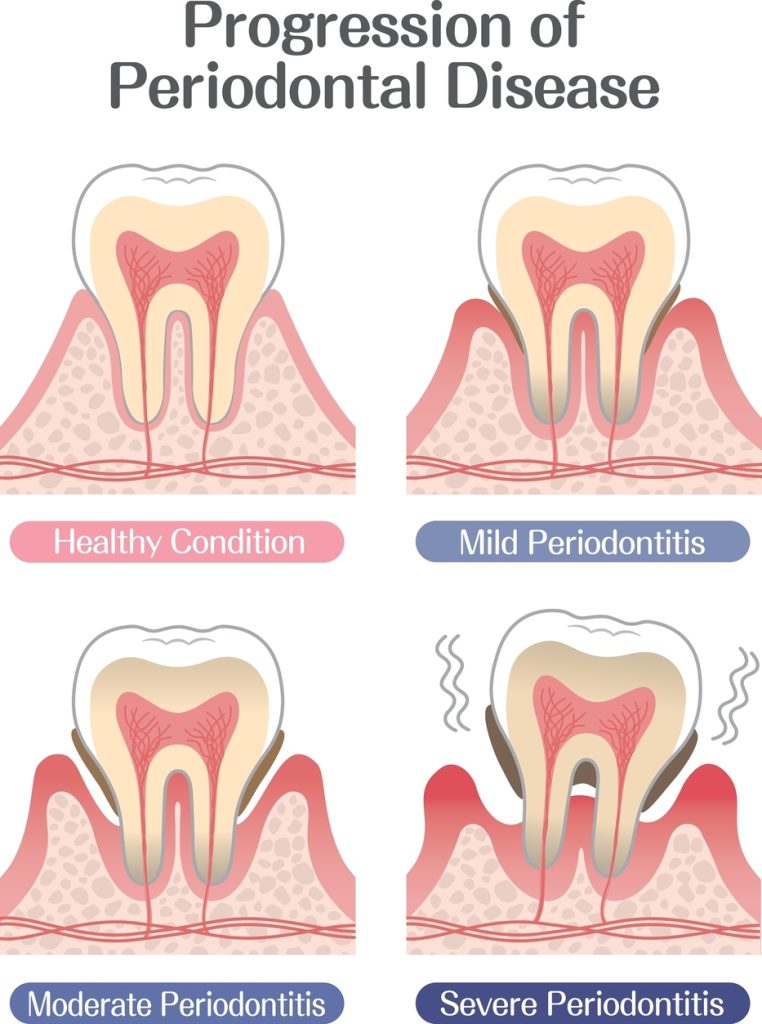
Periodontal disease is a bacterial infection or a chronic inflammatory condition affecting the tissues that support the teeth.
In its earlier stages, patients may notice bleeding while brushing, swollen gums, or persistent bad breath. As the disease progresses, the infection can extend deeper around the teeth and begin damaging the periodontal tissues and supporting bone.
Over time, this can lead to:
- Receding gums
- Deeper periodontal pockets
- Progressive jawbone loss around the teeth
- Teeth appearing longer as the gums recede
- Changes in tooth position
- Loose or mobile teeth
- Difficulty biting and chewing
- Eventual tooth lossbone
This is why advanced periodontal disease is not simply a problem affecting the gums. Once substantial supporting bone has been lost, the stability and long-term prognosis of the teeth can also be affected.
Why Keeping Compromised Teeth Is Not Always the Right Decision
The instinct to hold onto natural teeth as long as possible is understandable. But in cases of severe bone loss, keeping teeth that are beyond saving is actively counterproductive. Chronically infected teeth with minimal bone support continue to drive inflammation and that inflammation continues destroying the surrounding bone every month they remain in place.
The bone that dissolves while a hopeless tooth is being preserved is bone that could have supported an implant. Early assessment to identify which teeth are salvageable and which should be extracted protects the best possible implant outcome.
The Treatment Approach: Extraction, Planning, and Implants in One Workflow
For patients where natural teeth can no longer be preserved, the modern treatment workflow at BFC Dental Implant Center coordinates everything into a single surgical session where clinically appropriate:
- 3D digital assessment: CBCT X-ray imaging and intraoral scanning produce a complete 3D map of bone volume, density, and architecture across the entire jaw. Even where widespread bone loss has occurred, this identifies the specific areas where sufficient density remains for implant placement.
- Digital treatment planning: Specialist software calculates optimal implant position, angle, and depth for each fixture, maintaining safe margins from nerve pathways and the sinus cavities. A custom 3D Surgical Guide is fabricated from this data to physically lock those positions during surgery.
- Same-day extractions and implant placement: Where possible, remaining hopeless teeth are extracted in the same surgical session as implant placement, minimizing total procedures and recovery time.
- Strategic implant positioning: Implants are placed in the densest available bone. Where the posterior ridge is too thin or the sinus has expanded, angled implant techniques allow fixation into stronger deeper bone without requiring a bone graft in many cases.
- Teeth in 24 hours: Once implants achieve sufficient primary stability, a fixed temporary bridge is placed within 24 hours. Patients leave with functional teeth the same day, no extended gap period, no removable interim solution.
What Full Mouth Implants Restore in Gum Disease Cases
For patients who have lived with progressive gum disease for years, the changes after successful implant treatment are wide-ranging:
- Chewing: Fixed, stable implant-supported teeth restore near-natural bite force and food freedom. No more avoidance diets.
- Speech: Teeth in the correct positions restore clear pronunciation of sounds that depend on tongue-to-tooth contact.
- Confidence: A natural-looking fixed smile that cannot slip removes the social anxiety that loose or failing teeth create.
- Health & quality of life: Eliminating chronic oral infection removes a persistent inflammatory burden on the immune system. Combined with restored nutrition from better chewing, patients often report broader wellbeing improvements.
- Bone preservation: Implants transmit chewing forces into the jawbone, stimulating maintenance and slowing further resorption, which protects facial structure over time.
For many patients with advanced gum disease, this is why full mouth implant treatment is about more than replacing teeth. It is about rebuilding a stable foundation for eating, speaking, smiling, and living with greater confidence.
If you have been told implants are not possible because of gum disease or bone loss, a second opinion from an experienced implant specialist may change that picture. Contact BFC Dental Implant Center to discuss your specific situation.